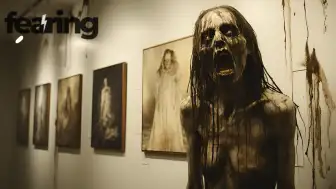











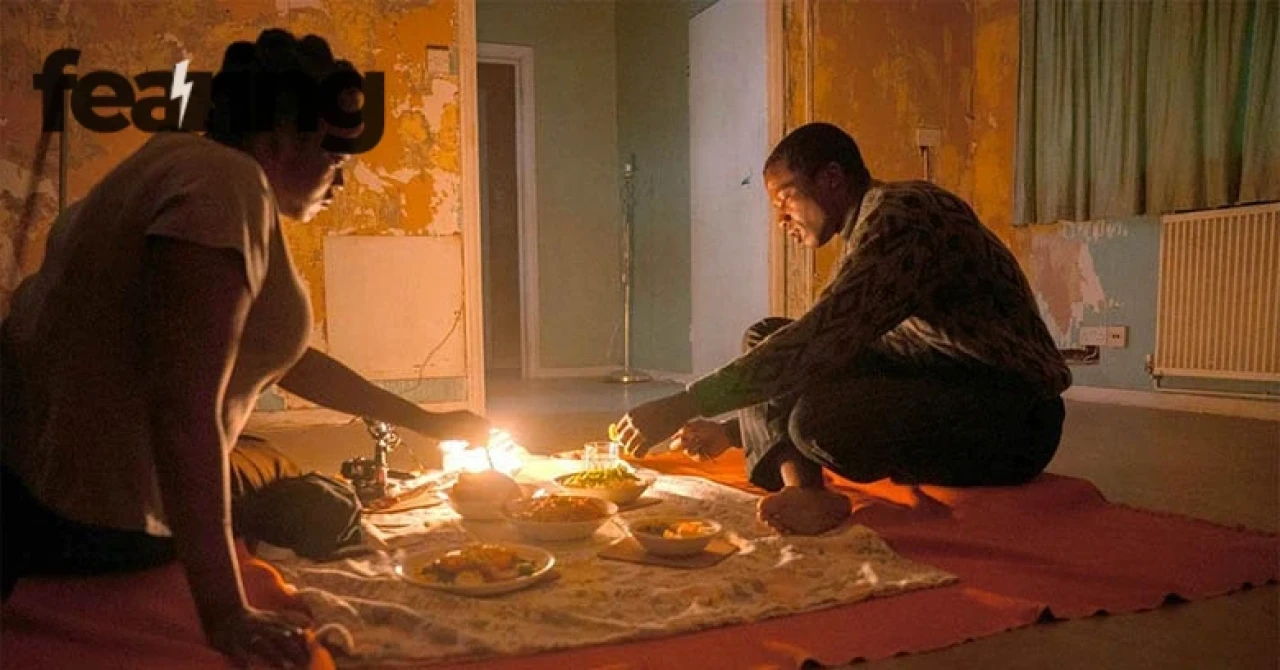
His House opens not with monsters but with memories. The film immediately traps its audience in the minds of refugees haunted by guilt and grief. The keyword itself, His House, carries double meaning — both the physical home where they seek safety and the inner space they cannot cleanse of their past. Through its chilling imagery, restrained pacing, and emotional resonance, the film redefines what modern horror can be.
Story and Setting
Bol and Rial Majur flee war-torn South Sudan after a devastating personal loss. They reach England, where the government provides temporary housing — a deteriorating structure that seems to breathe and whisper. Their supposed refuge becomes a prison. The haunting begins subtly: sounds behind walls, shadows in empty rooms, and voices echoing from the sea.
As director Remi Weekes said in interviews, “The ghosts are not villains. They are memories asking to be acknowledged.” That idea is the film’s heartbeat. The house is less a haunted building than a living metaphor for trauma.
Film Details
| Attribute | Information |
|---|---|
| Title | His House |
| Release Year | 2020 |
| Country of Origin | United Kingdom |
| Language | English |
| Genre | Psychological Horror / Drama |
| Director | Remi Weekes |
| Writer | Remi Weekes (story by Felicity Evans & Toby Venables) |
| Runtime | 93 minutes |
| Production Company | Regency Entertainment / BBC Films / Starchild Pictures |
| Distributor | Netflix |
| Main Cast | Sope Dirisu (Bol Majur), Wunmi Mosaku (Rial Majur), Matt Smith (Mark), Javier Botet (Apeth Spirit) |
| Awards | 4 British Independent Film Awards (Best Actress, Best Director, Best Production Design, Best Screenplay) |
Central Themes
His House transforms refugee trauma into cinematic symbolism. It explores:
Survivor’s Guilt – The couple’s haunting stems from a moral decision during their escape.
Cultural Displacement – They try to assimilate while the house rejects their denial of heritage.
Memory as Punishment – The past doesn’t die; it manifests as physical horror.
Belonging and Identity – Their marriage, faith, and sanity fracture under pressure to “fit in.”
As scholar Carol J. Clover famously stated, “The best horror externalizes internal fear.” His House perfects that formula.
Direction and Cinematography
Remi Weekes’s direction is confident and purposeful. Every shot feels claustrophobic; the camera often traps characters inside the frame like prisoners of memory. Cinematographer Jo Willems uses low-key lighting and muted tones to contrast bureaucratic realism with supernatural unease.
Sound plays a major role — soft whispers, rhythmic knocks, distorted hymns — all suggesting that memory itself has texture. Instead of jump scares, tension builds through rhythm and silence.
Performance and Reception
| Aspect | Detail |
|---|---|
| Sope Dirisu (Bol) | Portrays obsession with assimilation; internal guilt leads to denial and fear. |
| Wunmi Mosaku (Rial) | Balances empathy and strength; a calm but haunted presence. |
| Matt Smith (Mark) | Embodies detached bureaucracy; a chilling symbol of systemic coldness. |
| Critical Response | Universal acclaim for originality, emotional depth, and direction. |
| Rotten Tomatoes Score | 100 % (critics) / 75 %(audience) |
| Metacritic Score | 72 / 100 (Generally Favorable) |
| Audience Reaction | Viewers praise it as “a horror that makes you cry as much as it scares you.” |
Symbolism and Metaphor
Every crack in the wall, every puddle of water, is symbolic. Water becomes the recurring motif — representing death, rebirth, and the inescapable crossing they endured. The Apeth spirit, an African folklore entity, serves as conscience personified.
Unlike typical Western horror that ends with exorcism, His House resolves through acceptance. Bol and Rial don’t defeat the ghost; they coexist with it — acknowledging guilt rather than denying it.
Comparative Table – His House vs. Conventional Haunted House Films
| Element | Typical Haunted House | His House (2020) |
|---|---|---|
| Setting | Isolated mansion in the countryside | Government-issued refugee housing |
| Source of Fear | Evil spirit or curse | Manifestation of guilt and trauma |
| Resolution | Escape or exorcism | Acceptance and atonement |
| Theme | “Don’t disturb the dead.” | “You can’t escape your past.” |
| Emotional Tone | Fear and shock | Empathy and reflection |
Expert and Viewer Voices
“A haunting blend of refugee realism and supernatural terror. His House redefines what horror can mean.” — The Guardian Film Review
“It’s less about ghosts and more about what we owe to those we left behind.” — Roger Ebert Review
“I expected ghosts, but I got guilt and forgiveness instead.” — Anonymous User Comment
These statements show that audiences and critics aligned on one rare point: His House scares by telling the truth.
Why You Should Watch His House (2020)
Fresh Perspective – It’s the first horror film to frame migration through supernatural metaphor.
Powerful Performances – Dirisu and Mosaku turn grief into poetry.
Authentic Cultural Depth – Uses African folklore and real refugee experiences.
Masterful Direction – Weekes balances tension and emotion flawlessly.
Critical Acclaim – 100 % approval from major review aggregators.
Social Relevance – A mirror of today’s global migration crisis.
Emotional Impact – Leaves you haunted by compassion, not fear.
FAQs
Is His House based on a true story?
No, but it’s inspired by genuine refugee experiences and trauma studies.
Is it scary or emotional?
Both. The fear grows from emotion, not from shock.
What does the title mean?
It reflects ownership — the spirit claiming the house, and guilt claiming Bol’s conscience.
How long is the film?
Approximately 93 minutes, perfect for a tight and intense viewing experience.
Closing Reflection
His House (2020) stands as one of the decade’s most important horror films — not because it terrifies, but because it empathizes. It reveals that home can be both sanctuary and punishment, depending on what you bring inside. The final image, showing Bol and Rial surrounded by the ghosts they now accept, isn’t tragic — it’s liberation.
The film doesn’t exorcise its demons; it learns to live with them. That’s what true healing — and true horror — looks like.
Sources
The Guardian – “His House Review”
Roger Ebert – “His House Movie Review (2020)”
IndieWire – Interview with Remi Weekes
Rotten Tomatoes – Critic and Audience Scores
Netflix Q4 2020 Viewership Data
British Independent Film Awards 2020 Winners List