










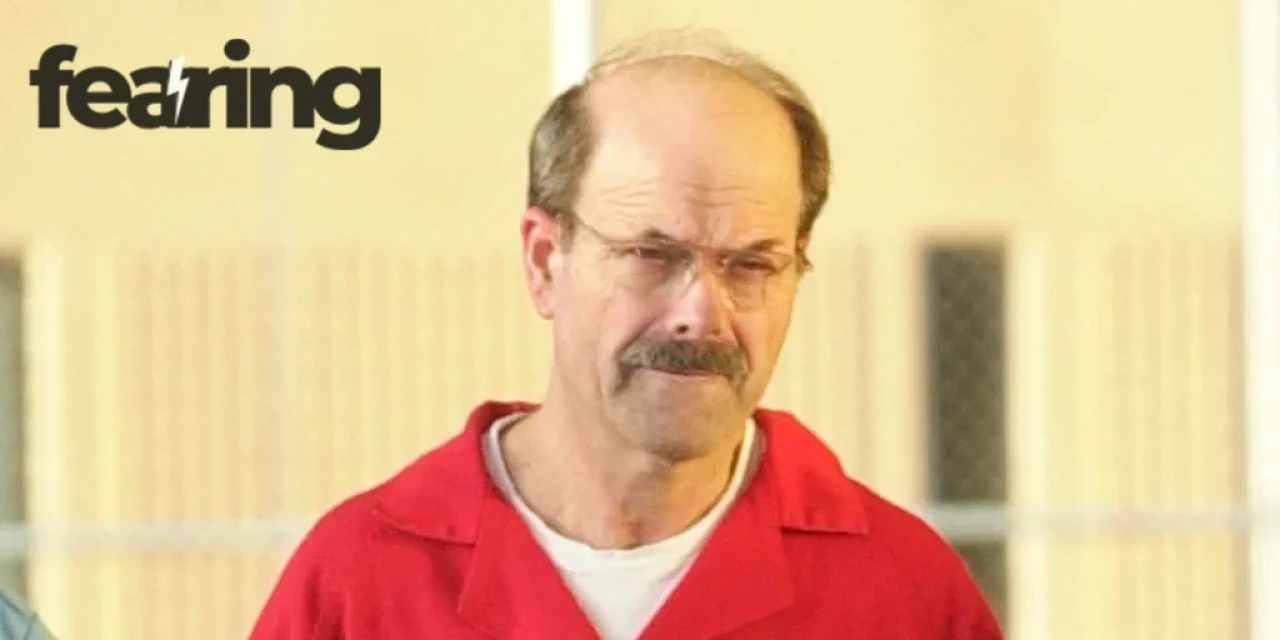
Dennis Lynn Rader — known to the world as BTK (Bind, Torture, Kill) — was one of America’s most calculating serial killers. For over three decades, he terrorized Wichita, Kansas, by committing brutal murders and mocking police with taunting letters. His crimes were not spontaneous acts of rage; they were meticulously planned performances.
“He didn’t just kill,” said FBI profiler Roy Hazelwood. “He choreographed every murder like theater — with himself as the director.”
A Quiet Family Man With a Double Life
Born in 1945 in Kansas, Dennis Rader appeared to be an ordinary suburban man: a husband, father, church leader, and Boy Scout volunteer. Beneath this façade, however, lived a predator obsessed with domination and ritualized violence.
He began murdering in 1974, choosing victims at random but always following his mantra: Bind them, torture them, kill them.
Neighbors described him as polite and reliable, yet behind closed doors he kept a hidden world of bondage sketches, stolen clothing, and handwritten fantasies.
The First Murders
His first known victims were the Otero family, killed on January 15, 1974. He strangled the parents and two of their children inside their Wichita home. Rader later wrote to police, calling it “a project.”
| Year | Victims | Details |
|---|---|---|
| 1974 | The Otero Family (4 victims) | Strangulation and binding |
| 1977 | Shirley Vian, Nancy Fox | Same ritual pattern |
| 1985 | Marine Hedge | Killed and posed body for photos |
| 1991 | Dolores Davis | His final known victim |
Each murder was methodical — binding, torturing, then killing — followed by an almost ceremonial staging of the body.
“He was driven by control and fantasy,” said criminologist Dr. Katherine Ramsland, who later co-authored Confession of a Serial Killer with Rader.
Taunting the Police
Rader’s ego demanded recognition. Between 1974 and 1979, he sent letters and poems to newspapers and law enforcement, describing his crimes in chilling detail.
He even suggested his own nickname — BTK — in a note to a local TV station.
He went silent for nearly 25 years, believing he had evaded justice. But in 2004, unable to resist attention, he began writing again.
| Communication | Year | Outcome |
|---|---|---|
| Handwritten letters | 1974–79 | Spread panic, led to manhunt |
| Resumed contact | 2004 | Triggered renewed investigation |
| Final message (floppy disk) | 2005 | Led to arrest |
That floppy disk, traced to Christ Lutheran Church, finally exposed him — the very place where he served as president of the congregation.
The Capture
On February 25, 2005, Rader was arrested while driving near his home in Park City, Kansas. Inside his home, police found thousands of photographs, trophies from victims, and detailed journals of each murder.
When confronted, he confessed calmly, describing each killing in chilling, emotionless detail — as if he were reciting a work report.
“I’m a monster,” he admitted. “I did it because I could.”
Psychological Profile
Dennis Rader exhibited the classic triad of psychopathy: manipulation, narcissism, and lack of empathy. His crimes were acts of control, not chaos.
| Psychological Trait | Behavior |
|---|---|
| Narcissism | Sought media attention, named himself “BTK” |
| Compartmentalization | Lived double life — family man and killer |
| Ritualistic Fantasy | Bound victims, took photographs, relived murders |
According to Dr. Ramsland, his sexual gratification came not from violence itself but from domination and anticipation — the preparation was often more thrilling than the act.
The Trial and Sentencing
In June 2005, Rader pled guilty to 10 counts of first-degree murder. His confessions were so detailed that even seasoned detectives were horrified.
He received 10 consecutive life sentences with no possibility of parole.
At sentencing, Rader apologized to victims’ families — though his flat tone betrayed a lack of remorse.
“Your words mean nothing,” one survivor’s sister said in court. “You enjoyed our pain.”
The Aftermath and Legacy
Rader’s case remains one of the most studied in criminal psychology and forensic profiling. It exposed the limitations of technology at the time and reshaped how investigators interpret communication from serial offenders.
The BTK killer demonstrated that serial murderers can live undetected among ordinary people, maintaining stable jobs and families.
| Impact Area | Key Change |
|---|---|
| Criminal Profiling | Improved linguistic and digital forensics |
| Law Enforcement Communication | Stricter media protocols for taunting offenders |
| Public Awareness | Greater education on predatory psychology |
“He taught us that evil doesn’t always look like evil,” said FBI profiler John Douglas.
FAQ
Q1: Why did Dennis Rader stop killing after 1991?
A1: He claimed he was “busy with life,” but experts suggest he lost confidence and feared capture.
Q2: How was he finally caught?
A2: A floppy disk he sent to police contained metadata linking to his church computer.
Q3: Where is he now?
A3: He is serving life sentences at El Dorado Correctional Facility in Kansas.
Q4: Did his family know?
A4: No. His wife and children were reportedly shocked and have lived under new identities since.
Q5: Why did he choose the name BTK?
A5: It reflected his ritual method — “Bind, Torture, Kill.”
Sources
Wichita Eagle – BTK Case Archive
BBC – How BTK’s Floppy Disk Led to His Capture