










The Unabomber, known formally as Theodore John Kaczynski, wasn’t an ordinary criminal — he was a mathematician turned domestic terrorist, whose war against industrial society lasted nearly two decades. Between 1978 and 1995, Kaczynski mailed or placed 16 bombs, killing 3 people and injuring 23 more.
His homemade explosives targeted universities, airlines, and individuals he believed were advancing technology at the expense of human freedom. Yet what made him infamous wasn’t just the bombs — it was his 35,000-word manifesto, Industrial Society and Its Future, which argued that technological progress would ultimately enslave humanity.
“He was the first terrorist philosopher,” wrote journalist Alston Chase. “Brilliant, cold, and convinced that destruction was logic, not madness.”
Early Life of a Prodigy
Born in Chicago in 1942, Ted Kaczynski showed extraordinary intelligence early.
He scored 167 IQ, entered Harvard at 16, and earned a Ph.D. in mathematics from the University of Michigan by 25.
But brilliance gave way to alienation. At Harvard, he participated in psychological experiments run by Dr. Henry Murray, which involved sustained humiliation and stress — experiences some biographers believe fractured his psyche.
After resigning from a teaching post at UC Berkeley, Kaczynski retreated to a remote cabin in Montana, living without electricity or running water. There, isolation hardened his anti-industrial philosophy into obsession.
“He saw civilization as a cage,” said author Andrew Solomon. “Every machine was a chain link.”
The Beginning of the Bombings
His first attacks were crude — small bombs left at universities and airports, signed only with the mysterious initials “FC” (Freedom Club).
| Year | Target | Result |
|---|---|---|
| 1978 | Northwestern University | Minor injuries |
| 1979 | American Airlines Flight 444 | Bomb failed mid-flight, 12 injured by smoke |
| 1985–1987 | University of California & computer stores | Two deaths |
| 1993–1995 | Executives & academics | One killed, several maimed |
Each bomb grew more sophisticated, handmade from wood, wires, and scrap metal — designed not just to kill but to puzzle. Investigators realized they were chasing a meticulous, patient mind.
“Every device was a signature,” said FBI agent James R. Fitzgerald. “He built his ego into every wire.”
The Manifesto That Exposed Him
In 1995, Kaczynski demanded that major newspapers publish his manifesto, Industrial Society and Its Future, or the killings would continue.
After weeks of debate, The Washington Post and The New York Times printed it on September 19, 1995, under FBI advisement.
The essay warned that technology was destroying autonomy and nature, claiming:
“The Industrial Revolution and its consequences have been a disaster for the human race.”
The manifesto attracted thousands of readers — including Kaczynski’s brother, David, who recognized the writing style and turned him in.
| Event | Date | Outcome |
|---|---|---|
| Manifesto published | Sept 1995 | Public fascination explodes |
| Brother contacts FBI | Feb 1996 | Linguistic match confirmed |
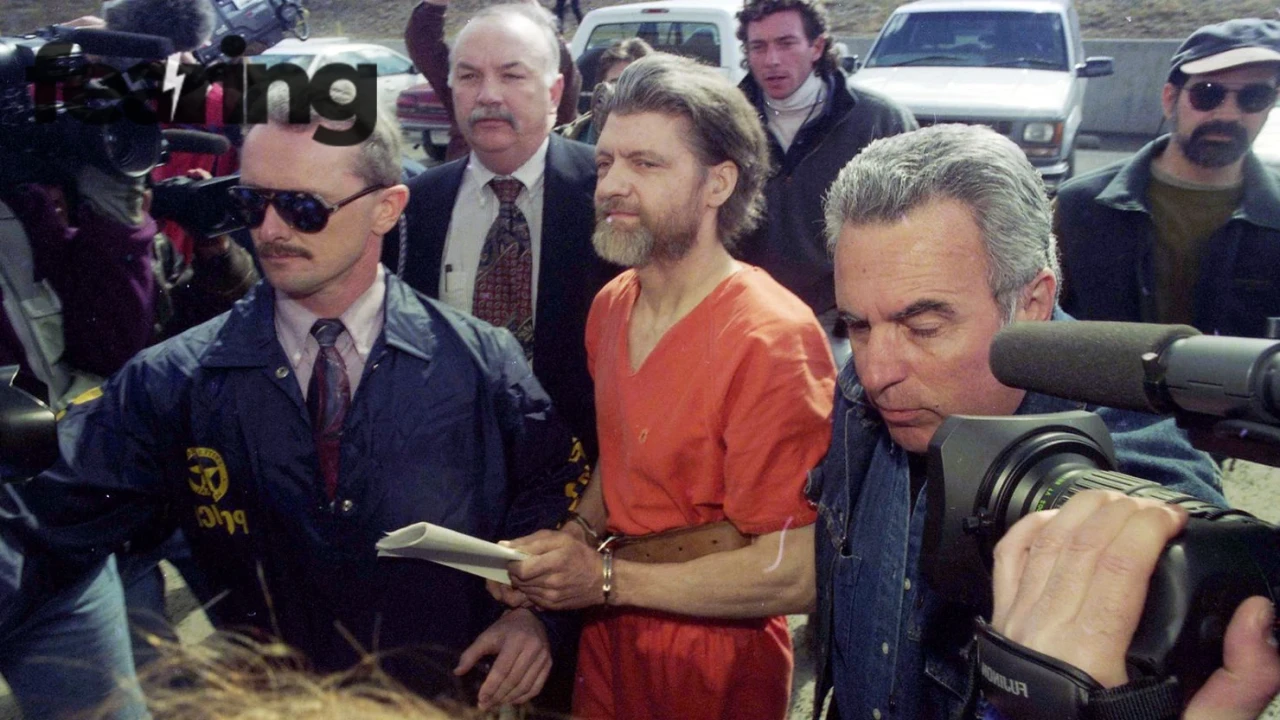
| Arrest at Montana cabin | Apr 1996 | Bombs and journals discovered |
The Cabin of the Unabomber
When agents raided his 10-by-12-foot cabin, they found:
Bomb-making materials and wiring.
Detailed journals describing every attack.
Lists of targets labeled “experiments.”
Original typed drafts of his manifesto.
The cabin was a paradox — both laboratory and monastery — containing no electricity, yet an abundance of intellectual rage.
“It was the loneliest crime scene I’ve ever seen,” said ATF investigator Jerry Burns.
The Trial and Life Sentence
Kaczynski was indicted on 10 federal counts of transportation, mailing, and use of bombs resulting in death.
He attempted to represent himself but was declared mentally unfit after refusing an insanity defense.
In 1998, he accepted a plea deal to avoid the death penalty and was sentenced to life imprisonment without parole at ADX Florence, the U.S.’s most secure federal prison.
| Charge | Count | Sentence |
|---|---|---|
| Bombing resulting in death | 3 | Life imprisonment |
| Bombing causing injury | 23 injured | Life imprisonment |
| Threats & transportation of bombs | Multiple | Life imprisonment |
“I am not insane,” he told the court. “I am simply right.”
The Mind of a Technological Prophet
Psychiatrists diagnosed Kaczynski with paranoid schizophrenia, yet his manifesto has been studied in philosophy and ethics courses worldwide.
His writings predicted surveillance capitalism, data dependency, and environmental collapse — making him a grim prophet for the digital era.
| Concept in Manifesto | Modern Parallel |
|---|---|
| Loss of autonomy through machines | AI dependence, smartphone addiction |
| Government surveillance via tech | Mass data tracking |
| Industrial growth destroying nature | Climate crisis |
| Rejection of modern medicine | Anti-science backlash |
“He was brilliant, but brilliance without empathy becomes tyranny,” said cognitive scientist Dr. Steven Pinker.
The Death of Ted Kaczynski
On June 10, 2023, at age 81, Ted Kaczynski was found dead in his prison cell, reportedly by suicide. His death closed a decades-long chapter of debate — was he a madman, a visionary, or both?
“He died in silence,” wrote The Atlantic, “in the very isolation he believed would save mankind.”
The Unabomber’s Cultural Shadow
Kaczynski’s story continues to inspire books, documentaries, and series like Manhunt: Unabomber.
His legacy forces reflection on modern technology’s moral costs — whether the price of progress truly is freedom itself.
| Cultural Impact | Description |
|---|---|
| Criminal Profiling Advances | Linguistic forensics pioneered in this case. |
| Tech Skepticism Movement | Manifesto influenced eco-radicals and “neo-Luddites.” |
| Ethical Tech Debate | Sparked academic discussions on progress versus humanity. |
“The tragedy of Ted Kaczynski,” noted philosopher Dr. John Gray, “is that his diagnosis of civilization was insightful — but his prescription was barbaric.”
FAQ
Q1: How many people did the Unabomber kill?
A1: Three, with 23 injured, across 17 years of attacks.
Q2: What does “Unabomber” mean?
A2: It comes from University and Airline Bomber, the FBI’s case code.
Q3: Why did he target universities and airlines?
A3: He believed they symbolized technological domination and loss of individual freedom.
Q4: Was Ted Kaczynski mentally ill?
A4: Diagnosed paranoid schizophrenic, yet legally competent and self-aware.
Q5: What happened to his cabin?
A5: It was removed and displayed at the Newseum in Washington, D.C. as a cautionary artifact.
Sources
The Washington Post – Inside the Unabomber’s Mind
The New York Times – Publication of the Manifesto