










Few criminals in history have embodied contradiction like Ted Bundy — handsome yet monstrous, articulate yet sadistic, intelligent yet remorseless.
Behind his disarming smile and charming demeanor lay one of the most prolific serial killers the United States has ever known. Between 1974 and 1978, Bundy abducted, assaulted, and murdered at least 30 women across seven states, though experts believe the number may be far higher.
“He was the perfect predator,” said FBI profiler Robert Ressler. “He understood trust — and how to destroy it.”
The All-American Mask
Born Theodore Robert Cowell in 1946, Bundy grew up in a seemingly normal family in Burlington, Vermont.
But his early years were marked by identity confusion — raised to believe his mother was his sister, and his grandparents were his parents. This emotional instability, combined with a growing fascination for control and violence, shaped the personality of a narcissistic predator.
By college, Bundy appeared confident and ambitious. He studied psychology at the University of Washington, volunteered for political campaigns, and even worked for a suicide hotline, where co-worker Ann Rule — later his biographer — described him as “empathetic and gentle.”
“He had that all-American face,” Rule wrote. “No one suspected the darkness behind his eyes.”
The Victims and the Pattern
Bundy’s victims were almost all young women with long brown hair parted in the middle — a chilling consistency that revealed both obsession and ritual.
He often approached them in public places, pretending to be injured or needing help with his car, before overpowering them.
| Year | Victim(s) | Location | Notes |
|---|---|---|---|
| 1974 | Lynda Ann Healy | Seattle, WA | Disappeared from home |
| 1974 | Janice Ott & Denise Naslund | Lake Sammamish | Two women abducted same day |
| 1975 | Caryn Campbell | Aspen, CO | Abducted from hotel |
| 1975 | Georgann Hawkins | Seattle, WA | Vanished from campus |
| 1978 | Lisa Levy & Margaret Bowman | Tallahassee, FL | Attacked in Chi Omega sorority |
He lured his victims with charm — pretending to have a broken arm, flashing a friendly smile — before turning violent.
“He weaponized normalcy,” noted criminologist Dr. Katherine Ramsland. “Bundy proved that evil doesn’t look like a monster — it looks like us.”
The Psychology of Control
Bundy’s killings were not driven purely by sexual desire or rage. They were acts of domination and performance.
He relished manipulation — of his victims, the police, and even the public. Each crime fed his sense of superiority.
Psychological traits identified:
Narcissistic Personality Disorder
Antisocial Behavior
Sadistic Gratification
Grandiose Self-Image
He later admitted to returning to the dump sites of his victims, sometimes days later, to revisit their corpses — an act combining control and fantasy.
“He wanted to possess them completely,” said FBI profiler John Douglas. “Even after death.”
The Cross-Country Killer
Bundy’s killing spree stretched from Washington to Utah, Colorado, Idaho, Oregon, and eventually Florida.
He escaped police custody twice, using charm and cunning to slip through security.
| Escape | Year | Details |
|---|---|---|
| First | 1977 | Escaped from law library in Aspen by jumping from a window |
| Second | 1977 | Escaped from Garfield County Jail, fled to Florida |
| Captured | 1978 | Arrested after traffic stop in Pensacola, FL |
His second escape led to one of his most horrific attacks — the Chi Omega sorority murders at Florida State University in 1978.
In less than 15 minutes, Bundy bludgeoned and strangled two women and severely injured two others before fleeing.
“He turned violence into theater,” wrote reporter Stephen Michaud. “Every killing was another act in the show he was directing.”
The Trial That Became a Spectacle
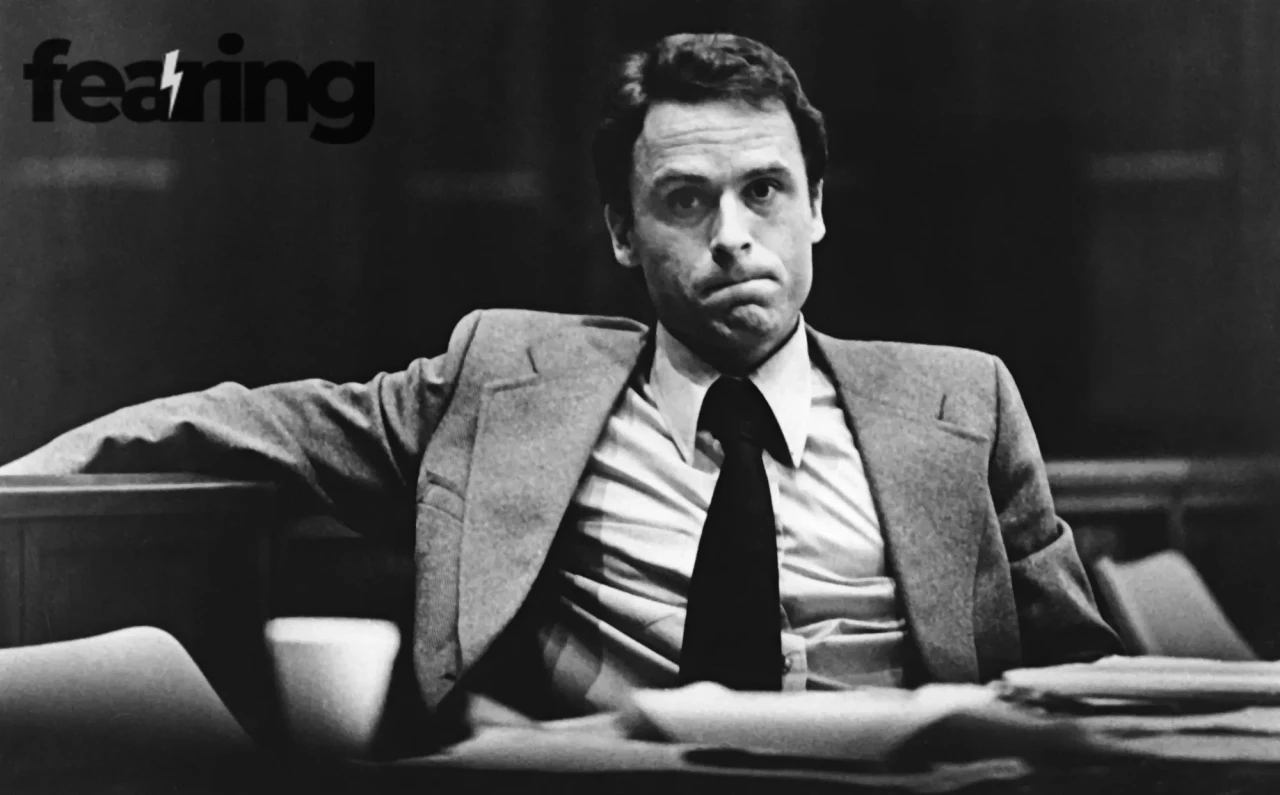
Bundy’s trial was the first televised capital murder trial in U.S. history. Millions tuned in to watch the handsome, well-spoken defendant represent himself in court.
He smiled, flirted, and even proposed marriage to Carole Ann Boone, a woman who had fallen in love with him during the proceedings.
In a surreal twist, the judge allowed the proposal to stand as a legal marriage under Florida law.
“You’re a bright young man,” Judge Edward Cowart told Bundy at sentencing. “I’d have loved to have you practice law in front of me — but you went another way, partner.”
He was sentenced to death for the murders of Lisa Levy and Margaret Bowman, later linked to dozens of others through forensic evidence.
| Charge | Sentence |
|---|---|
| Murder (Levy, Bowman) | Death |
| Kidnapping & Assault | Death |
| Multiple Counts (Other States) | Life Sentences |
The Confession and Execution
For years, Bundy maintained his innocence, manipulating journalists and law enforcement alike.
But as his execution date approached in 1989, he began confessing to dozens of murders in a desperate attempt to delay death.
“I deserve the most extreme punishment,” he finally said. “Society deserves to be protected from me.”
On January 24, 1989, Bundy was executed in the electric chair at Florida State Prison. Outside, crowds cheered and waved signs reading “Burn, Bundy, Burn.”
His brain was later examined for abnormalities — none were found.
The Legacy Of Manipulation
Bundy’s case became a blueprint for criminal profiling. He taught the FBI’s Behavioral Analysis Unit that intelligence and charisma could coexist with psychopathy and sadism.
His ability to mirror empathy made him both terrifying and instructive.
Bundy’s Lasting Impact on Criminal Psychology:
Helped refine the FBI’s Organized/Disorganized Offender model.
Inspired studies on narcissistic psychopathy.
Led to improved public awareness campaigns on personal safety for women.
Influenced popular culture through films and documentaries, from The Deliberate Stranger to Extremely Wicked, Shockingly Evil and Vile.
“Ted Bundy was not a monster from another planet,” said profiler Roy Hazelwood. “He was human — and that’s what makes him so terrifying.”
The Cultural Obsession
Decades later, Bundy remains a paradox — both studied as a case and mythologized as a pop culture figure.
Documentaries, films, and podcasts continue to dissect his life, often blurring the line between fascination and fear.
His enduring presence reflects a collective question: how can something so ordinary become so monstrous?
“Bundy is a mirror,” wrote author Ann Rule. “He shows us the face we all hope we never see — our own potential for darkness.”
FAQ
Q1: How many people did Ted Bundy kill?
A1: He confessed to 30 murders, but experts estimate the true number may exceed 100.
Q2: Why was he considered charming?
A2: Bundy was intelligent, articulate, and handsome — traits that disarmed victims and society alike.
Q3: Did Bundy really escape from jail?
A3: Yes, twice in 1977 — once by jumping from a window, and again through a ceiling crawl space.
Q4: What was his motive?
A4: Power, control, and narcissistic gratification — not sexual desire alone.
Q5: How did Bundy die?
A5: He was executed by electric chair on January 24, 1989, in Florida.
Sources
BBC – The Psychology Behind Ted Bundy
The Guardian – Ted Bundy’s Trial and the Media Circus